
What Happens When a Business Doesn’t Adapt to AI?
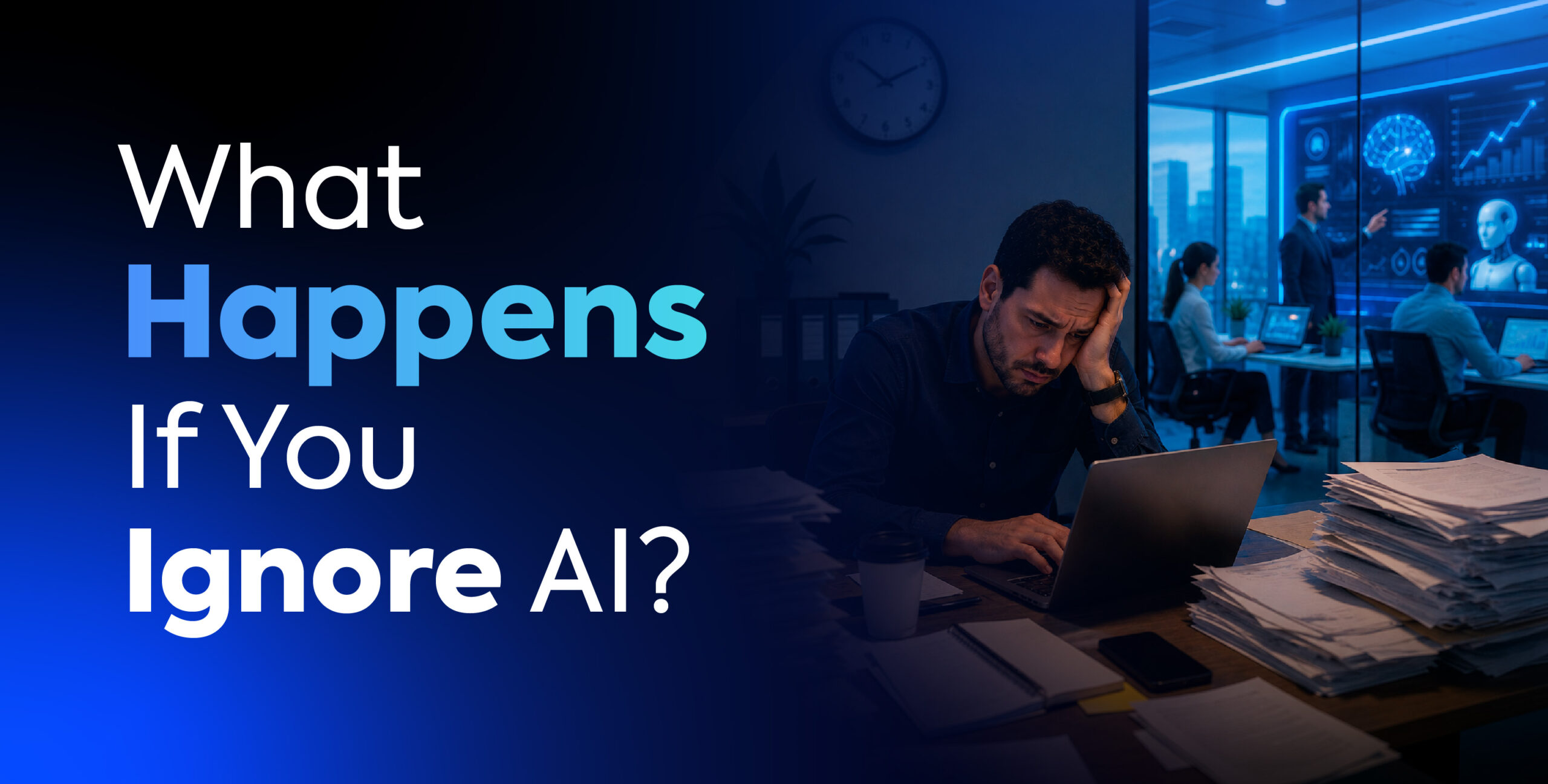
What happens when a business doesn’t adapt to AI? As artificial intelligence continues transforming industries, many companies are exploring how AI can improve efficiency, productivity, and decision-making.
Throughout history, businesses have continuously adapted to new technologies. From computers and email to cloud platforms and mobile devices, each innovation has changed the way organizations operate.
Today, artificial intelligence is becoming part of that evolution. Companies across industries are exploring how AI can help improve productivity, streamline operations, and support better decision-making.
However, not every business adopts new technologies at the same pace. Some organizations embrace change early, while others prefer to wait.
The answer is not necessarily immediate. But over time, the gap between businesses that leverage new tools and those that don’t may become increasingly noticeable.
Technology Has Changed the Way Businesses Operate
Technology has always played a role in business growth.
Processes that once required hours of manual work can now be completed in minutes.
Communication has become faster.
Information is easier to access.
Operations are often more efficient.
Artificial intelligence represents another step in this ongoing evolution.
Businesses that understand how to use these tools effectively may gain advantages in productivity and efficiency.
Those that choose not to adapt may find themselves relying on slower processes while competitors continue to improve.

Competitors May Gain Efficiency Advantages
One of the biggest impacts of AI is its ability to simplify repetitive tasks.
Businesses that adopt AI may be able to:
- respond faster to customer inquiries;
- organize information more efficiently;
- automate routine processes;
- and reduce administrative workload.
Over time, these improvements can create operational advantages.
This doesn’t mean companies that avoid AI will fail.
However, competitors who use technology effectively may be able to accomplish more with the same resources.
Manual Processes Can Become a Growing Challenge
As businesses grow, manual processes often become harder to manage.
More customers.
More data.
More communication.
More responsibilities.
What worked for a small operation may become increasingly difficult to maintain at a larger scale.
Artificial intelligence can help support growth by simplifying certain processes.
Businesses that continue relying entirely on manual workflows may find it more challenging to keep up with increasing demands.
Customer Expectations Continue to Evolve
Customer expectations rarely stay the same.
People increasingly expect:
- faster responses;
- easier access to information;
- personalized experiences;
- and efficient service.
Many businesses are using AI to help meet these expectations.
Whether through customer support tools, automated workflows, or data-driven insights, AI is helping organizations improve responsiveness and accessibility.
Competitors May Gain Efficiency Advantages
One of the biggest impacts of AI is its ability to simplify repetitive tasks.
Businesses that adopt AI may be able to:
- respond faster to customer inquiries;
- organize information more efficiently;
- automate routine processes;
- and reduce administrative workload.
Over time, these improvements can create operational advantages.
This doesn’t mean companies that avoid AI will fail.
However, competitors who use technology effectively may be able to accomplish more with the same resources.
Manual Processes Can Become a Growing Challenge
As businesses grow, manual processes often become harder to manage.
More customers.
More data.
More communication.
More responsibilities.
What worked for a small operation may become increasingly difficult to maintain at a larger scale.
Artificial intelligence can help support growth by simplifying certain processes.
Businesses that continue relying entirely on manual workflows may find it more challenging to keep up with increasing demands.
Customer Expectations Continue to Evolve
Customer expectations rarely stay the same.
People increasingly expect:
- faster responses;
- easier access to information;
- personalized experiences;
- and efficient service.
Many businesses are using AI to help meet these expectations.
Whether through customer support tools, automated workflows, or data-driven insights, AI is helping organizations improve responsiveness and accessibility.
Businesses that ignore these changes may find it harder to deliver the level of experience customers expect.

The Cost of Waiting May Be Higher Than Expected
Many companies assume that delaying adoption has little impact.
In some situations, that may be true.
However, waiting too long can sometimes mean missing opportunities to improve efficiency, reduce workload, or enhance customer experiences.
The challenge is not necessarily the technology itself.
It is the possibility of falling behind while competitors continue to evolve.
For many organizations, exploring AI does not require a complete transformation.
It simply means identifying areas where technology can provide meaningful value.
Frequently Asked Questions
Does every business need AI?
Not necessarily. However, many businesses can benefit from exploring how AI may improve specific processes or operations.
Will businesses that don’t use AI automatically fail?
No. Success depends on many factors. However, businesses that embrace useful technologies may gain advantages in efficiency and productivity.
Is AI replacing traditional business practices?
In many cases, AI is enhancing existing processes rather than replacing them entirely.
What is the best way to start using AI?
Many organizations begin by identifying repetitive tasks or operational challenges where AI can provide practical support.
Final Thoughts: Adaptation Has Always Been Part of Business Growth
Business environments are constantly changing.
New technologies create new opportunities.
Customer expectations evolve.
Processes become more complex.
Understanding what happens when a business doesn’t adapt to AI is ultimately about understanding the importance of adaptation itself.
Because throughout history, successful businesses have not been defined by the tools they use.
They have been defined by their willingness to learn, evolve, and embrace opportunities that help them grow.